Myrcene
Myrcene doesn't raise potency - it helps shape the experience.
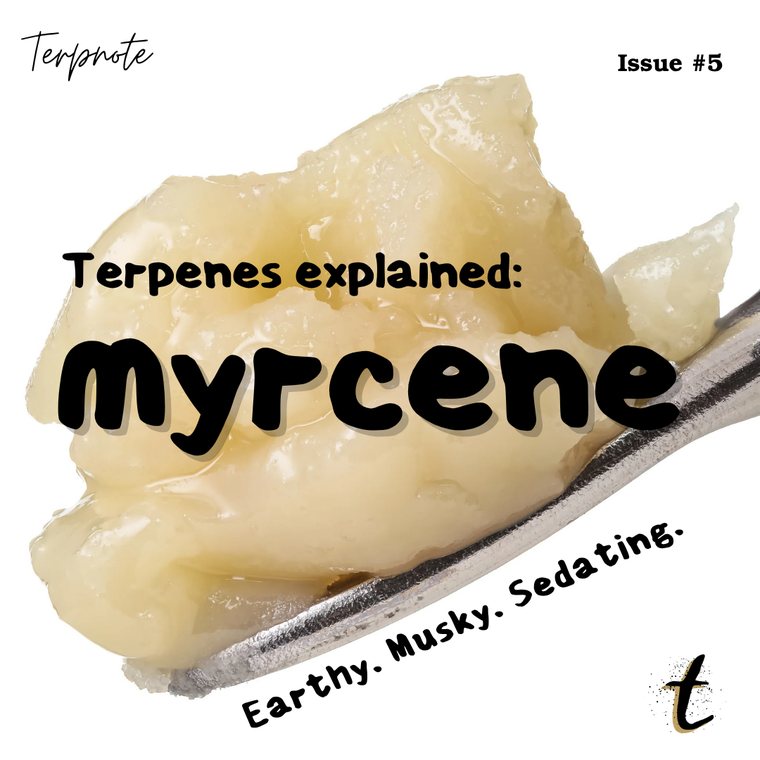
One of the most abundant terpenes found in cannabis. Earthy and musky, often described as clove-like or ripe, and deeply pungent at higher concentrations. It plays a role in how cannabinoids interact and are perceived - shaping effects beyond THC alone.
Why myrcene matters
It's one of the most prevalent terpenes in cannabis and a key contributor to how cannabis is experienced. Its bioactive, lipophilic nature lets it interact easily with biological systems, and myrcene-rich profiles often correlate with heavier, body-focused effects. Worth saying clearly: these are correlations, not proven causal effects.
What the research is showing
Across published studies, β-myrcene is examined for biological activity related to relaxation, pain response, and inflammation. Reported activities include analgesic, sedative, antidiabetic, antioxidant, anti-inflammatory, antibacterial, and anticancer effects. Much of this work is preclinical - but several independent research groups have reported consistent findings across models, which is why it remains one of the most studied terpenes in cannabis science.
Also found in
Mango, thyme, lemongrass, hops - linking familiar scents across species.
What the research shows
The studies featured in this issue on @terpnote, linked straight to the source.
Myrcene modulates CB1 receptor function via enhancement of endocannabinoids
Looks at whether myrcene boosts the body's own endocannabinoids at the CB1 receptor.
Read the study ↗LabMyrcene exhibits antitumor activity against lung cancer cells by inducing oxidative stress and apoptosis mechanisms
Research summaries are for education, not medical advice. A lot of terpene research is still preclinical (lab and animal studies) - promising, not proven.