Caryophyllene
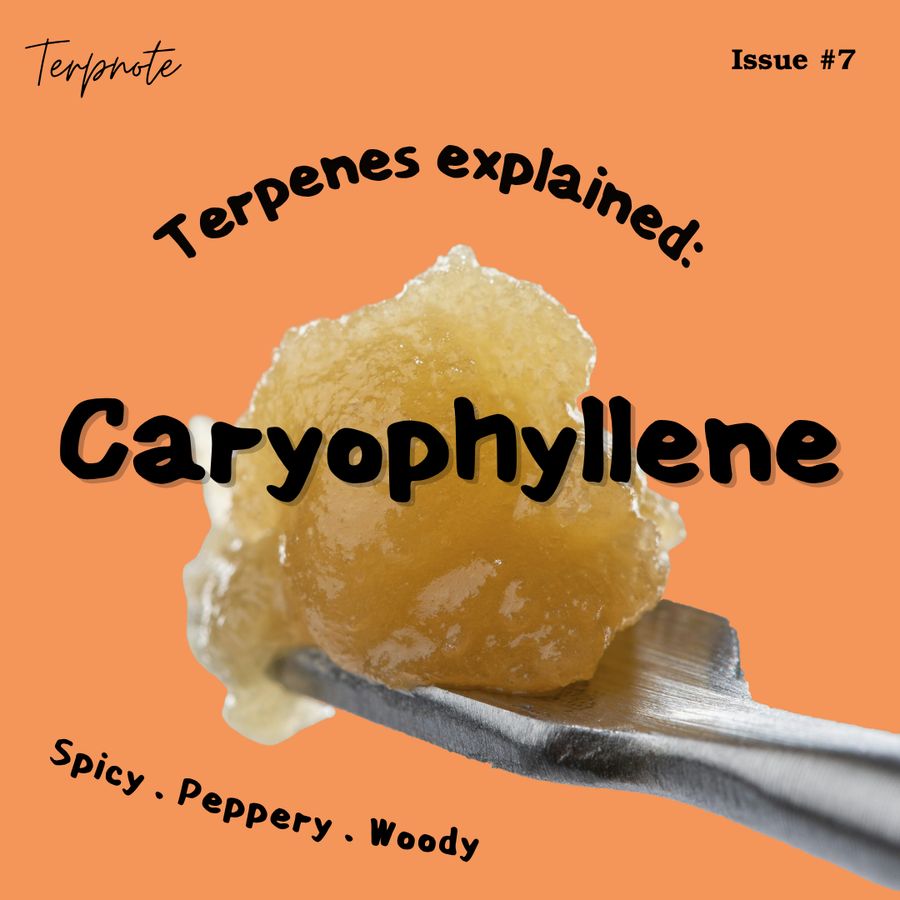
The full Caryophyllene breakdown is coming soon on @terpnote. Here’s the short version until then.
The spicy, peppery note at the back of a lot of gassy, funky profiles - the same compound that gives black pepper and cloves their bite. What makes it different: research has shown it binds directly to the body's CB2 receptor, which is why it's been called a "dietary cannabinoid."
What we know so far
Most of what's known comes from lab and animal work. In the 2008 study that first identified it as a CB2 ligand, caryophyllene produced anti-inflammatory effects in mice through that receptor.
Also found in
Black pepper, cloves, hops, rosemary.
What the research shows
The study behind the headline.
Research summaries are for education, not medical advice. A lot of terpene research is still preclinical (lab and animal studies) - promising, not proven.